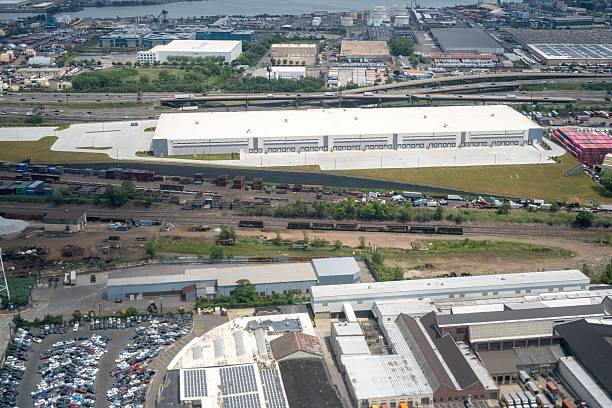
Tigard’s backbeat: rails, work shifts, and everyday rituals in Tigard, Oregon
If you start the day at the Tigard Transit Center, you can feel how the town moves. Commuters queue for WES, cyclists roll through on the Tigard Heritage Trail, and delivery trucks nose along Pacific Highway while Main Street opens its doors. That mix of trains, trails, and small-city errands is Tigard’s rhythm, the one locals keep whether they’re headed to a shift off Hunziker or corralling kids toward the library after school.
Where the rails still shape a workday
Tigard’s layout makes more sense once you picture its early 1900s rail map. The Oregon Electric and Southern Pacific’s Red Electric both ran through here, and that corridor still fingerprints the town. The Tigard Heritage Trail traces three-quarters of a mile of former rail right-of-way parallel to Tigard Street, a commuter spine for walkers and riders that ties Main Street to neighborhoods south of downtown. Interpretive art on the trail nods to that industrial past, without turning it into a museum piece.
WES Commuter Rail, running on Portland & Western tracks, is the present-day version of that worker line. It connects Beaverton, Tigard, Tualatin, and Wilsonville on weekdays about every 45 minutes during the morning and afternoon peaks. Fares are integrated with Hop Fastpass, so an Adult ride is $2.80 for a 2½‑hour pass, and you’re capped at $5.60 for the day if you tap the same card or phone again. The Tigard Transit Center platform sits a short block from downtown’s businesses, which is why you’ll see rail riders duck into coffee shops before heading on foot to offices and shops along Hall and Burnham.
If you’re not riding the train, you may be on foot or bike. The Fanno Creek Trail knits downtown to the Tigard Public Library and neighborhoods beyond. The renovated boardwalk and underpasses make it a real “connector,” not just a park path. On recent weekday closures for maintenance, you could feel how many errands it normally carries, from stroller trips to quick lunch walks. Library staff see that flow too, with doors open Monday–Thursday 10 a.m.–8 p.m. and Friday–Sunday 10 a.m.–6 p.m. at 13500 SW Hall Blvd.
What’s the practical way to cross town without a car?
Between the trails and the mall-and-bus combo, you’ve got choices. If you’re connecting to regional routes, Washington Square’s transit center and hours do a lot of lifting. Stores at Washington Square are generally open Monday–Saturday 10 a.m.–9 p.m. and Sunday 11 a.m.–7 p.m., and the mall’s west deck has EV charging if you’re driving. Bus lines converging at the Washington Square Transit Center give you frequent connections back to Tigard’s core or up toward Beaverton.
If you’re sticking to downtown, the easiest crosstown line is still your feet. The Fanno Creek Trail ducks under Pacific Highway to link Main Street, Universal Plaza, and the library without playing frogger on 99W. City Hall and the Permit Center sit just up Hall from that network, with the Permit Center counter open Monday–Thursday 8 a.m.–6 p.m. for the life-admin side of things. The Police lobby is open 8 a.m.–6 p.m. daily if you need to handle a records request or other public-facing business without guessing whether the building is staffed.
Coming by car and worrying about turnover downtown? The city enforces signed two‑hour parking limits in the Main Street area to keep spaces circulating for businesses. If you need longer, use a public lot off Tigard Street or walk from neighborhoods where you’re not jockeying with lunchtime diners.
From factory clock to lunch counter: Main Street’s everyday loop
Tigard’s “industrial heritage” isn’t a fenced-off warehouse district. It leaks into the daily loop: folks heading from shift changes along 72nd or Hunziker to a sandwich on Burnham, parents cutting across the trail to Universal Plaza to let kids run before a grocery stop. That’s the feel most days at Universal Plaza itself, open 10 a.m.–8 p.m. daily, with restrooms and a boardwalk that sit squarely in the pedestrian web between errands.
On Sundays in the season, the plaza flips into a market. The Tigard Farmers Market runs Sundays 9:00 a.m.–1:30 p.m. from May 3–October 25, 2026 at 9100 Burnham Street, and it’s the most consistent read on local food habits you’ll get here. Admission is free, and the crowd is a mix: shifts getting off early, soccer families between games, and a solid block of neighbors walking in on the trail. If you’re timing a visit for produce, their calendar typically lines up strawberries in early June and peaches by mid‑ to late July.
On weekdays, “downtown lunch” usually means something quick around Main Street. Symposium Coffee at 12345 SW Main Street opens Monday–Saturday 7 a.m.–6 p.m.Sunday 8 a.m.–3 p.m.
City facilities mirror that rhythm. The Permit Center’s Monday–Thursday 8 a.m.–6 p.m.
How do locals cool off, bowl a game, or catch a movie after work?
Evenings here bend toward simple pleasures, and the price points are surprisingly clear if you know where to look.
The Tigard Swim Center at the high school is a reliable cool‑down, with daily admissions posted by the Tigard‑Tualatin Aquatic District. In‑district drop‑in is $6 for adults and $5 for students, seniors, and military; out‑of‑district drop‑in is $7 adults and $6 students/seniors/military. If you swim regularly, three‑month passes drop that per‑visit cost, and the district’s schedule pages show when lap and open swims run during the week.
Five minutes away on 99W, Tigard Bowl keeps it old‑school with per‑game pricing. As of January 2026, open bowling runs $6 per person per game on weekdays before 5 p.m., $6.50 most evenings and Sundays, and $7 on Friday nights and for Glow Bowl; shoe rental is $4. Leagues fill whole evenings, so call ahead if you want to make sure there’s a lane during after‑work hours.
If your wind‑down is a movie instead, The Joy Cinema and Pub at 11959 SW Pacific Highway still does it the Tigard way: $7 matinees, $9 general admission after 5 p.m., $7 for kids and seniors, and $5 Tuesdays. “Weird Wednesday” is a standing date for cult and public‑domain oddities at 9:15 p.m., free admission for that show only, 18+ required.
For a night out with a curtain, Broadway Rose Theatre Company runs its box office from the New Stage at 12850 SW Grant Ave, Monday–Friday noon–6 p.m. Ticket tiers vary by production and date, but recent mainstage shows have listed adult seats from $35–$54, with youth pricing and 19–35 discounts clearly labeled. The company performs at the New Stage most of the year and shifts to Tigard High School’s Deb Fennell Auditorium in the summer, so check the venue when you buy.
| After‑work option | Typical hours | Cost | Useful detail |
| Joy Cinema and Pub (11959 SW Pacific Hwy) | Showtimes vary; “Weird Wednesday” 9:15 p.m. | Matinee $7; Evening $9; Kids/Seniors $7; Tuesdays $5 | Weird Wednesday is free for that show only; 18+ policy for that screening. |
| Tigard Bowl (11660 SW Pacific Hwy) | Open daily; leagues fill some evenings | Weekdays before 5 p.m. $6/game; Evenings/Sun $6.50; Fri night & Glow Bowl $7; Shoes $4 | Call ahead for open lanes; pricing effective 1/2/2026 is posted on their site. |
| Tigard Swim Center (8680 SW Durham Rd) | Lap/Open swims vary by day | In‑district: Adults $6, Students/Seniors/Military $5; Out‑of‑district: Adults $7, Students/Seniors/Military $6 | Three‑month and annual passes reduce per‑visit cost; family swim nights offered. |
| Tualatin Riverkeepers Rentals (Cook Park, 17005 SW 92nd Ave) | Seasonal, late May–early Sept; weekends and selected Fridays | Single kayak or SUP $38/3 hours; Doubles/Canoes $48/3 hours; member discounts apply | All rentals launch and return at Cook Park; life jackets provided. |
Tualatin River edge: Cook Park at shift’s end
Cook Park is where Tigard exhales at dusk. It’s the city’s biggest riverfront park, and in summer it doubles as a water access point. Tualatin Riverkeepers runs a rental hub right in the park at 17005 SW 92nd Ave, with three‑hour slots at $38 for a single kayak or paddleboard and $48 for doubles and canoes, typically on weekends from late May into early September. Rentals include paddles and life jackets and must start and end at Cook Park, so you’re not juggling transport or roof racks.
Cook’s shelters tell you something about how residents actually use parks. The city’s rental season runs from the first Saturday in April through the last Sunday in September. The large Shelter #2 near the inclusive playground books at a higher tier, while most other Cook shelters and Summerlake’s shelter follow the standard rate. As of the current fee schedule for events, typical special‑event shelter rates run $25/hour (resident) or $50/hour (non‑resident) for most shelters, and $35/hour (resident) or $70/hour (non‑resident) for Shelter #2; standard park‑shelter rentals list posted fees like $35/hour at Shelter #1 outside the special‑event framework. If you’re serving alcohol, plan to add the city’s $25 alcohol permit and the required insurance certificate. Those little policy footnotes are what make a Saturday picnic actually work.
Universal Plaza follows the same “use it every day” model. Open 10 a.m.–8 p.m. with restrooms, it’s designed as a stop along the errand chain, not a special‑occasion lawn. During market season, it’s a grocery run; after school, it’s a pressure‑release valve before homework; after a shift, it’s a place to stretch your legs on the boardwalk and figure out dinner.
Key things to know before you go
- WES is a peak‑period tool. It runs on weekdays about every 45 minutes in the morning and afternoon. With Hop, your Adult fare is $2.80 for 2½ hours and caps at $5.60 for the day.
- The core walking link is Fanno Creek Trail. It connects downtown, the library, and Universal Plaza without crossing 99W at grade. If a short segment is closed for maintenance, detours are signed on Main and Grant.
- Library hours support real life. The Tigard Public Library is open Mon–Thu 10 a.m.–8 p.m. and Fri–Sun 10 a.m.–6 p.m., and downtown coffee on Main opens at 7 a.m. on weekdays.
- Downtown parking turns over. Two‑hour limits on Main and nearby blocks are signed and enforced. For longer stays, use public lots off Tigard Street or walk in on the trail.
- Cook Park shelters and the river are scheduled spaces. Shelter rentals run April–September with posted hourly fees; river rentals at Cook Park are seasonal and three‑hour by default, so book ahead on warm weekends.
Reader Q&A
Is there a way to get from downtown Tigard to Washington Square without driving?
Yes. If you’re timing it to commute windows, WES plus a short bus hop out of Beaverton or Tigard Transit Center works with one Hop fare. Outside commute times, bus routes through the Washington Square Transit Center are frequent, and downtown’s Fanno Creek Trail connects easily to those stops. Washington Square hours are Mon–Sat 10 a.m.–9 p.m. and Sun 11 a.m.–7 p.m., so plan your return accordingly.
What’s the actual price to cool off at the pool?
The Tigard Swim Center posts standard drop‑in pricing: in‑district $6 for adults and $5 for students, seniors, and military; out‑of‑district $7 adults and $6 students/seniors/military. If you swim a lot, three‑month and annual passes lower your per‑visit cost. Check the district’s current calendar for lap and open swim blocks.
When is the Tigard Farmers Market, and do I need tickets?
It’s free to enter. The market runs Sundays 9:00 a.m.–1:30 p.m. from May 3–October 25, 2026 at Universal Plaza, 9100 Burnham Street. Many people walk or bike in via the Fanno Creek Trail to avoid jockeying for short‑term parking on Burnham and Main.
Is there an evening option that doesn’t blow the budget?
Plenty. Joy Cinema’s $7 matinees and $5 Tuesdays are an easy pick, and “Weird Wednesday” is free for that late show. Tigard Bowl’s posted per‑game prices start at $6 on weekday afternoons, and with Hop your second TriMet ride earns you a $5.60 Day Pass cap, so your bus or train trips won’t add up beyond that in one day.
To narrow your choices, set your anchor first: a library or plaza stop if you’re on foot, a WES time if you’re riding, or a shelter or movie showtime if you’re driving. In Tigard, the rest of the evening tends to arrange itself along that one fixed point.
Published: September 25, 2026 · Reviewed by the State Of Oregon editorial team